


Renovating vs Moving in Wellington: Which Is the Better Choice?
- 2 minutes ago
- 9 min read

You've spent weeks scrolling through Trade Me. Every weekend has been filled with open homes, but nothing quite feels right.
One house is too small. Another needs more work than you're prepared to take on. A third is in the wrong suburb altogether.
If you're weighing up renovating vs moving in Wellington, you're not alone. Many homeowners reach a point where their current home no longer meets their needs, but deciding whether to renovate or relocate isn't always straightforward. Understanding the costs, lifestyle implications, and long-term benefits of each option can help you make a more confident decision.
It's a question many Wellington homeowners eventually face.
Whether your family has outgrown the house, the layout no longer works, or you're dreaming of a larger kitchen, another bathroom, or better indoor-outdoor flow, deciding whether to renovate or move is a big decision.
While moving can seem like the obvious solution, it's not always the best one. Often, the home you've been searching for isn't somewhere else. It's the one you're already living in, thoughtfully redesigned to suit the way you live today.
If you're only beginning to explore the idea of renovating, our blog Planning a Renovation in Wellington explains what to expect before your project gets underway.
In this guide, we'll help you compare both options so you can make the decision that's right for your family, your budget, and your future.
Renovating vs Moving? The Pros and Cons
Before diving into the details, here's a quick comparison:
Renovating | Moving |
Stay in the neighbourhood you love | Start again in a new location |
Design spaces around your family's lifestyle | Adapt to someone else's layout |
Improve the value of your existing home | Pay buying and selling costs |
Can often be completed in stages | Usually, one large financial commitment |
Keep children in the same schools | Potentially change schools and routines |
Retain the character you love | May still need to renovate the new home |
Still not sure which option is right for you?
You're not alone.
Every family's priorities are different. Some people need more space, while others simply need their existing home to function better. The following questions can help you identify which path is likely to suit you best.
Start by Asking Yourself One Simple Question
Before comparing costs or floor plans, ask yourself this:
Do we actually need a different house, or do we simply need our current house to work better?
Those are two very different questions.
Many older Wellington homes were designed for a different era. Families lived differently, kitchens were smaller, storage wasn't a priority, and open-plan living wasn't the norm.
Today, the frustrations many homeowners experience aren't necessarily caused by a lack of space. They're often caused by how that space is arranged.
A thoughtful renovation can completely change the way your home functions without requiring you to leave the neighbourhood you've come to love.
The Hidden Cost of Moving
When people compare renovating with moving, it's easy to focus on the purchase price of another property.
But that's only part of the picture.
Moving house often involves a long list of additional costs that can quickly add up, including:
Real estate commission
Marketing costs
Legal fees
Building inspections
LIM reports
Mortgage or lending costs
Removal companies
Utility connection fees
New furniture or appliances to suit a different home
Then there's another cost that's often overlooked.
Many homeowners buy another house only to discover it still isn't exactly what they wanted. The kitchen needs updating, the bathroom feels dated, or the layout isn't quite right.
Before long, they're renovating anyway.
For many families, investing that money into improving the home they already own can make far more financial sense.
Of course, every renovation needs a realistic budget. Understanding where your money is likely to be spent and planning for unexpected costs can make the entire process much less stressful. Our blog Planning a Renovation Budget shares practical advice to help you budget with confidence before work begins.
Questions to Ask Before You Decide
1. Do we still love where we live?
If you love your neighbourhood, schools, community, and commute, those lifestyle benefits can be difficult to replace.
2. Is it the house we dislike, or the way it functions?
Many homes have plenty of potential. Sometimes, a smarter layout can solve the problems that make you think you need to move.
3. What would moving really cost us?
Remember to factor in selling costs, legal fees, inspections, moving expenses, and any renovations your new home may still require.
4. Are our renovation goals realistic?
Every property is different. An experienced renovation builder can help you understand what's achievable before you commit to either option.
5. What will suit our family five or ten years from now?
Think beyond today's needs. Your decision should support the way you'll live in the years ahead.
Why Many Wellington Families Choose to Stay
For many homeowners, the location isn't the problem.
It's the house.
Perhaps you've spent years creating a life in your neighbourhood. You know your neighbours. Your favourite café is around the corner. The children can walk to school, and your daily routine works.
Moving means leaving all of that behind.
Renovating allows you to keep the things you already value while creating a home that's better suited to the next stage of your life.
Sometimes, that's worth far more than simply gaining another bedroom.
It's Amazing What a Better Layout Can Do
One of the biggest misconceptions about renovating is that you need to make the house significantly bigger.
In reality, many homes already have enough space.
It just isn't being used efficiently.
DID YOU KNOW?
A successful renovation isn't always about adding more floor area. Reconfiguring your existing layout can dramatically improve how your home functions without significantly increasing its footprint or changing the character of your home.
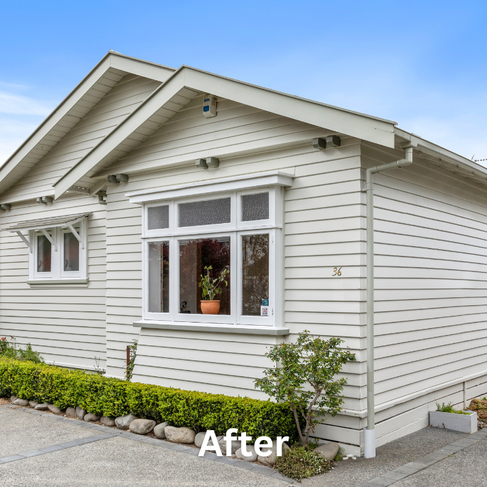
One of our renovation projects involved a client in central Lower Hutt whose much-loved 1920s cottage was no longer meeting their needs.
Rather than moving, she worked with their architect to explore how the existing home could be transformed.
The result wasn't a bigger house, but a smarter one.
She simply needed a better layout.
Real Project: Reimagining a 1920s Lower Hutt Cottage
The homeowner loved her central Lower Hutt neighbourhood, but the 1920s cottage no longer worked for her and her family.
Rather than moving, she asked a different question:
"How can we make this home work better?"
Working alongside the homeowner and her architect, we completely reconfigured the layout while retaining the home's original character. The renovation included:
Raising the living room floor so it sat level with the kitchen.
Removing an unused fireplace to create a more practical bedroom.
Relocating the dining area into the living room.
Converting the former dining room into an additional bedroom.
Transforming another bedroom into a modern family bathroom.
Converting the conservatory into a walk-in wardrobe and ensuite.
Installing a compact kitchen island to improve bench space and storage.
Without increasing the home's footprint, the renovation delivered an additional bedroom, a private master suite, a more functional kitchen, and much better flow throughout the home, allowing our client to stay in the neighbourhood she loved.
As the homeowner later shared:
"Kevin and Andrew's wealth of knowledge and experience gave me confidence from the beginning. They talked me through ideas, explained my options, and helped me make decisions I was comfortable with throughout the project. Upon completion, I am very pleased with the final product, and I would strongly recommend Orkney Construction to others."







Renovating in Wellington Isn't Like Renovating Anywhere Else
Every city presents its own renovation challenges.
In Wellington, steep sites, narrow accessways, high wind zones, and older housing stock can all influence how a renovation is planned and carried out. Many homes were built decades ago, often with layouts that no longer reflect the way families live today.
That's why local experience matters.
A builder who understands Wellington's terrain, weather conditions, and housing styles can often identify potential issues early, helping to reduce unexpected delays and costs during construction.
It's also important to understand whether your renovation will require building consent or other approvals.
The Ministry of Business, Innovation and Employment (MBIE) provides guidance on building work that may be exempt from building consent. However, exemptions don't remove the requirement to comply with the New Zealand Building Code, and every project should be assessed on its own merits.
Requirements can also vary depending on your property's location, the scope of the work, and your local council's requirements. While the latest MBIE guidance is a useful starting point, many homeowners aren't sure where to begin or what questions to ask. An experienced architect or designer can help you navigate the process, explain any consent requirements, and work with the local council where appropriate.
If you'd like a clearer understanding of how the building consent process works, our guide Building Consents in NZ: A How-To Guide walks you through the key steps, what information you'll need, and what to expect before construction begins.
Home Extensions Aren't the Only Answer
When people think about renovating, they often assume an extension is the only way to gain more space.
Sometimes that's true.
If your family genuinely needs additional floor area, extending your home may be the best solution. Whether it's adding another bedroom, enlarging the living area, or building a second storey, a well-designed extension can transform how your home functions.
But extensions aren't always necessary.
As the Lower Hutt renovation demonstrates, thoughtful reconfiguration can sometimes achieve the same outcome without significantly increasing the home's footprint.
Every property is different, which is why it's worth exploring all of the available options before deciding on the scope of your renovation.
If you're considering creating more space, you may also like to explore our Home Extensions service to see what's possible.
What Renovations Add the Most Value?
While creating a home that works better for your family should always be the priority, it's natural to think about future resale value as well.
Some renovations consistently make homes more attractive to buyers, including:
Modern kitchens
Updated bathrooms and ensuites
Additional bedrooms
Open-plan living spaces
Improved indoor-outdoor flow
Better storage solutions
Energy-efficiency improvements
Well-designed home extensions
The best renovations are those that improve everyday living while remaining appropriate for the home, the section, and the surrounding neighbourhood.
We'll explore this topic in more detail in our upcoming article, Which Home Renovations Add the Most Value in Wellington?
Talk to a Builder Earlier Than You Think
One of the biggest mistakes homeowners make is assuming they already know what's possible.
Sometimes the solution isn't adding more floor area. It's making better use of the space you already have.
Our Lower Hutt renovation is a good example. By rethinking the layout rather than simply adding on, the homeowner achieved an extra bedroom, a new family bathroom, a master ensuite, and a more practical living space, all without moving.
At Orkney Group, we've been renovating and extending Wellington homes for more than 20 years. Every project starts by understanding how you live, what's not working, and what you'd like your home to become before recommending the best solution.
When Moving Makes Sense
Renovating isn't always the right answer.
Sometimes, moving genuinely is the better option.
For example, you may decide to move if:
Your work or family circumstances require you to relocate.
Your section can't accommodate the changes you need.
The cost of renovating would outweigh the value it adds.
The home has significant structural issues that aren't practical to repair.
Planning rules or site constraints prevent the renovation you're hoping to achieve.
A good renovation builder should be honest enough to tell you when renovating isn't the best solution.
The goal isn't simply to renovate.
The goal is to help you make the right decision for your circumstances.
So... Should You Renovate or Move?
There's no universal answer to the question of renovating versus moving.
For some families, moving will be the right choice. For others, a thoughtful renovation can unlock the potential in the home they already own while allowing them to stay in the neighbourhood they love.
If you've decided that renovating may be the right option, the next step is understanding what's involved and assembling the right team. Our guides to Planning a Renovation in Wellington, Building Consents in NZ: A How-To Guide, and Understanding and Comparing House Builders' Quotes are all designed to help you feel more confident before your project begins.
If you'd like to talk through your own ideas, we'd be happy to arrange an obligation-free conversation...
Sometimes the best home isn't the one you haven't found yet. It's the one you're already in, thoughtfully redesigned to suit the way you live today and into the future.
Frequently Asked Questions
Is it cheaper to renovate or move in Wellington?
It depends on your circumstances. While renovating requires an upfront investment, moving also involves real estate commission, legal fees, moving costs, inspections, and potentially purchasing a more expensive home. Comparing the total cost of both options is the best place to start.
How do I know if my home is worth renovating?
If you love your location, your home has good structural integrity, and the changes you want are achievable within your budget, renovating is often worth exploring. Speaking with an experienced renovation builder can help you understand what's possible before making any major decisions.
Will renovating increase my home's value?
Well-planned renovations often improve both your enjoyment of the home and its appeal to future buyers. Kitchens, bathrooms, additional bedrooms, improved indoor-outdoor flow, and quality home extensions are among the projects that commonly add value.
Can I stay in my home during a renovation?
That depends on the size and complexity of the project. Smaller renovations may allow you to remain at home, while major renovations often require temporary accommodation during parts of the build. Your builder should discuss this with you during the planning stage.


