

Home Insulation NZ: How to Choose the Best Insulation for Your Home
Updated: Jul 23
Wellington Builders | Renovations | Construction | Design & Architecture Services | Environmentally Conscious | Wellington Roofing & Waterproofing | Wellington Painters

Winter in New Zealand has a way of revealing every weakness in your home.
Maybe it's the condensation running down your windows each morning. Perhaps it's the lounge that never seems to warm up, or the bedroom that feels icy no matter how high you turn the heat pump. Whatever the symptoms, they often point to the same underlying issue: your home isn't holding onto the warmth you're paying to create.
When researching home insulation, you'll quickly discover there is a range of products and insulation systems available. Good insulation is one of the smartest investments you can make in your home's comfort, health and energy efficiency.
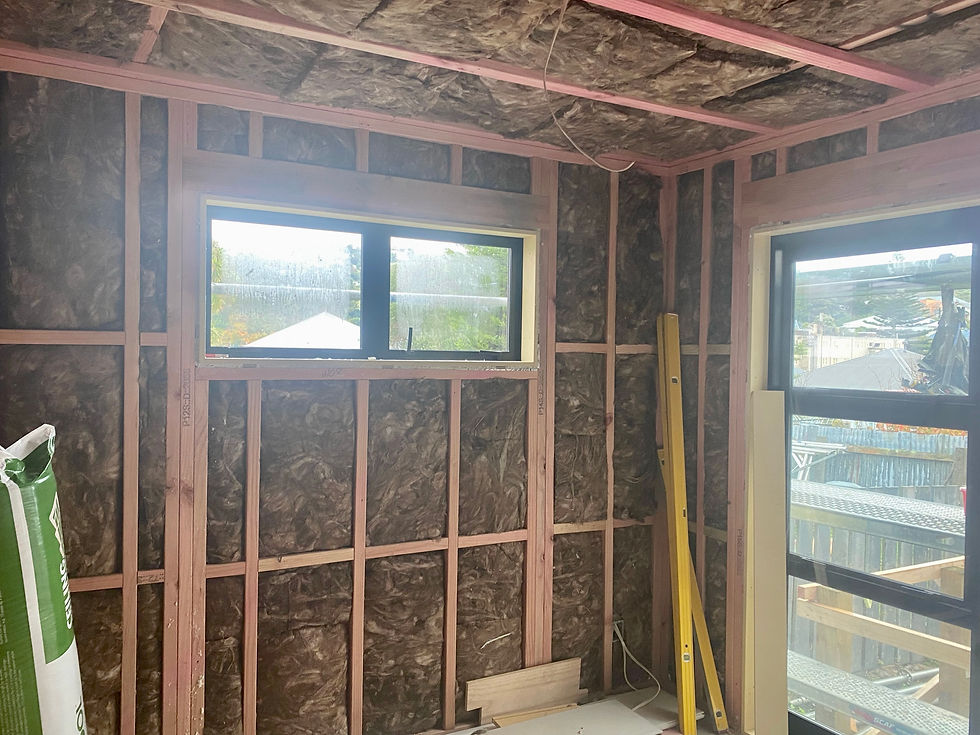
If you're planning a renovation, it's also one of the easiest upgrades to make while walls, ceilings or floors are already open. Once new linings are installed, adding or upgrading insulation becomes much more difficult and expensive.
In this guide, we'll explain how home insulation works, compare the most common insulation products available in New Zealand, and help you understand which options may be best suited to your home and your renovation plans.
Planning a renovation? Before choosing insulation, it's worth understanding the bigger picture. Read our article on "Planning a Renovation in Wellington?" to help your project get off to the best possible start.
Why Good Home Insulation Matters
Insulation isn't just about staying warm.
A well-insulated home creates a healthier, more comfortable environment while helping reduce energy consumption throughout the year.
Some of the biggest benefits include:
More consistent indoor temperatures
Reduced heat loss during winter
Lower heating and cooling costs
Less condensation on windows
Reduced risk of mould and dampness
Improved comfort throughout every room
Better acoustic performance in many situations
Of course, insulation works best as part of your home's complete thermal envelope. High-performing windows, good ventilation, airtight construction and careful detailing all work together to improve comfort and efficiency. Insulation is one important piece of that bigger picture.
For older Wellington homes in particular, upgrading insulation during a renovation can make a remarkable difference to how the home feels every day.
Understanding R-Values
If you've started researching insulation, you've probably come across the term R-value.
Put simply, an R-value measures how well a material resists the flow of heat. The higher the R-value, the greater the insulation's ability to slow heat transfer.
That doesn't automatically mean you should always choose the highest number available.
The right R-value depends on several factors, including:
Whether you're insulating the ceiling, walls or floor
The type and age of your home
Your local climate
The available cavity depth
Your overall renovation budget
It's also worth remembering that insulation only performs as well as it's installed. Gaps, compression and poor workmanship can significantly reduce its effectiveness, regardless of the advertised R-value.
Think of insulation like wearing a warm winter jacket. A premium jacket won't keep you warm if it's unzipped. Likewise, even high-quality insulation won't perform properly if it's poorly installed.
Home Insulation NZ: Which Type Is Right for Your Home?
There are several types of insulation available in New Zealand, each with its own strengths depending on your home, budget and renovation plans.
The table below provides a quick comparison of the most common options.
Insulation Type | Best For | Advantages | Considerations |
Glasswool | Most home renovations | Affordable, widely available, good thermal performance, fire resistant | Can irritate skin during installation and must be installed carefully to avoid gaps or compression |
Polyester | Family homes and renovations | Soft to handle, non-irritating, durable, good acoustic performance | Usually costs more than glasswool |
Wool | Premium or eco-conscious homes | Natural, renewable, moisture buffering, excellent acoustic performance | Higher cost and less readily available |
Mineral Wool | Areas requiring fire or sound protection | Excellent fire resistance, sound insulation and thermal performance | Generally more expensive and less common in residential homes |
EPS (Expanded Polystyrene) | Concrete slabs and specialised wall systems | Moisture resistant, lightweight and strong | Mainly used in specific applications rather than general wall insulation |
XPS (Extruded Polystyrene) | Foundations and below-ground areas | Very high moisture resistance and compressive strength | Higher cost and specialist applications |
PIR Boards | Roofs and tight cavities | High R-value in a relatively thin board | More expensive and generally installed by experienced contractors |
Spray Foam | Difficult-to-access cavities | Excellent air sealing and fills awkward spaces | Higher upfront cost and requires specialist installation |
Glasswool
Glasswool remains one of the most popular insulation products in New Zealand because it offers excellent value for money. It's suitable for ceilings, walls and underfloors, making it a practical choice for many renovation projects.
Polyester
Made from recycled plastic fibres, polyester insulation is soft to handle, durable and provides good thermal and acoustic performance. It's often chosen by homeowners looking for a non-irritating alternative to glasswool.
Wool
Wool insulation is a natural product that helps regulate moisture while providing excellent thermal and acoustic performance. Although it comes at a higher price, it's a popular choice for homeowners wanting more environmentally conscious building materials.
Specialist Insulation Products
Products such as mineral wool, EPS, XPS, PIR boards and spray foam are typically used for specific applications rather than general home insulation. Depending on the project, they may be recommended for areas requiring higher fire resistance, improved moisture protection, limited cavity space or enhanced air sealing. Your builder or designer can advise whether these products are appropriate for your renovation.
Quick Guide: Which Insulation Should You Choose?
If you're renovating a typical Wellington home:
✔ Best all-round value: Glasswool
✔ Best natural option: Wool
✔ Best easy-to-handle option: Polyester
✔ Best for specialist applications: EPS, XPS or PIR boards
✔ Best for awkward spaces: Spray foam (professionally installed)
What About Hemp, Straw and Other Natural Products?
Alternative insulation materials such as hemp, wood fibre and straw are becoming more common in specialised sustainable building projects.
While these products offer environmental benefits in some applications, they're still relatively niche within mainstream residential renovations in New Zealand. Availability, cost and installer experience can also be limiting factors.
For most homeowners, products such as glasswool, polyester or wool insulation remain the most practical choices.
"The best time to upgrade your insulation is while your walls, ceilings or floors are already open during a renovation."
Which Insulation Is Best?
There isn't a single "best" insulation product for every home.
The right choice depends on factors such as:
your renovation goals
your budget
the age of your home
where the insulation is being installed
whether thermal performance, acoustic performance or sustainability is your highest priority
An experienced builder can help you weigh up these factors and recommend the most appropriate solution for your specific project.
Which Insulation Upgrades Should You Prioritise During a Renovation?
One of the questions we're often asked is:
"If I can't afford to upgrade everything, where should I spend my money?"
The answer depends on your home, but in many older Wellington houses, we'd generally recommend the following order of priority.
1. Ceiling Insulation
If your ceiling insulation is old, thin or missing altogether, upgrading it can have a significant impact on comfort.
Because warm air naturally rises, a poorly insulated ceiling allows valuable heat to escape during winter. Improving your ceiling insulation is often one of the most cost-effective upgrades you can make.
If your renovation involves replacing the roof or removing ceiling linings, it's an ideal opportunity to install modern insulation.
2. Underfloor Insulation
Many older villas and weatherboard homes in Wellington have suspended timber floors.
Without adequate underfloor insulation, those floors can feel cold underfoot and allow significant heat loss.
Adding underfloor insulation can make rooms noticeably more comfortable, particularly during winter, and is often less disruptive than upgrading wall insulation.
3. Wall Insulation
Wall insulation often provides the greatest improvement in overall comfort, but it's also the most difficult to retrofit if the wall linings remain in place.
That's why renovations create such a valuable opportunity.
If you're already removing gibboard to alter layouts, rewire the home or replace plumbing, installing wall insulation at the same time usually makes excellent long-term sense.
Once the walls are closed again, that opportunity may not come around for decades.
Planning your renovation budget? Our guide to Renovation Budgets explains where insulation upgrades fit within the overall project and where they're likely to provide the greatest long-term value.
It's Not Just About the Insulation
Many homeowners focus on choosing the "best" insulation product.
In reality, how the insulation is installed is often just as important.
Even premium insulation can perform poorly if it has:
gaps around the edges
compressed batts
areas left uncovered
poor detailing around pipes or wiring
moisture problems
Good installation helps insulation perform as intended for many years to come.
That's why it's important to work with experienced trades who understand how insulation fits into the wider building system, rather than treating it as a simple afterthought.
Common Home Insulation Mistakes
After renovating homes throughout the Wellington region, we've seen a few common mistakes repeated time and time again.
Choosing on Price Alone
It's understandable to compare products based on cost.
However, the cheapest option isn't always the best value if it performs poorly, has a shorter lifespan or doesn't suit the application.
Think about insulation as a long-term investment rather than simply another line item in the renovation budget.
Only Upgrading One Area
Replacing ceiling insulation while leaving uninsulated walls and floors will certainly help, but your home still has weak points where heat can escape.
Whenever possible, it's worth considering how each part of the home's thermal envelope works together.
Forgetting About Moisture and Ventilation
Insulation helps slow heat transfer.
It doesn't remove moisture from the home.
If moisture can't escape, condensation can still occur, particularly in kitchens, bathrooms and laundry areas.
Good ventilation is just as important as good insulation.
Modern extractor fans, mechanical ventilation systems and sensible moisture management all contribute to a healthier indoor environment.
Compressing Insulation
Insulation needs tiny pockets of trapped air to work effectively.
Squashing batts into spaces that are too small can actually reduce their performance.
Choosing products designed for the available cavity depth is usually a better solution.
Ignoring Air Leaks
Even a well-insulated home can feel cold if draughts are constantly letting warm air escape.
Small gaps around:
windows
doors
recessed lighting
service penetrations
older joinery
can all affect comfort.
Addressing unwanted air leakage alongside insulation often delivers the best overall result.
"The best insulation product is the one that's right for your home, your budget and your renovation goals."
Your Windows Matter Too
One of the biggest misconceptions is that insulation alone will solve every comfort issue.
Unfortunately, that's rarely the case.
If your home still has older single-glazed windows, a significant amount of heat can continue to escape through the glass, even after upgrading the insulation.
Likewise, cold window surfaces can contribute to condensation during winter.
For many homeowners, improving insulation and upgrading windows together delivers far greater benefits than doing either one on its own.
The result is often:
more stable indoor temperatures
less condensation
lower heating costs
improved acoustic comfort
a more comfortable home throughout the year

Wondering whether new windows are worth the investment? Read our guide comparing Double Glazing vs Triple Glazing to understand the differences and which option may suit your home.
Creating a Warmer, More Energy-Efficient Home
Insulation is one of the foundations of an energy-efficient home, but it's only one piece of the puzzle.
Homes perform best when several elements work together, including:
quality insulation
well-performing windows
effective ventilation
good airtightness
efficient heating systems
thoughtful design that makes the most of natural sunlight
Rather than viewing these as separate upgrades, it's helpful to think of them as parts of the same system.
Each improvement supports the others, helping create a home that's not only warmer in winter but also more comfortable to live in throughout the year.
Many homeowners choose to make these improvements gradually as different renovation projects take place. Over time, those individual upgrades can add up to a significant improvement in comfort, energy efficiency and running costs.
Looking for more ways to improve your home's performance? Our article Eco-Friendly Home Renovation: 8 Practical Ways to Create a Warmer, More Efficient Home explores a range of practical upgrades that can make your home more comfortable while reducing energy use.
One thing we've learned over the years is that every home is different.
A 1920s villa has different challenges to a 1970s brick home, which in turn differs from a modern townhouse. The best insulation strategy depends on your home's construction, the scope of your renovation and your long-term goals.
That's why we always recommend looking at the whole picture, rather than choosing insulation in isolation.
Is It Worth Upgrading Your Insulation During a Renovation?
When building costs are rising or the economy feels uncertain, it's understandable to question which renovation upgrades are truly worth the investment.
Unlike cosmetic changes that simply refresh the appearance of your home, insulation continues to deliver value long after the renovation is complete.
A well-insulated home can offer:
Lower heating and cooling costs
Improved year-round comfort
Reduced condensation and dampness
A healthier indoor environment
Better energy efficiency
Potentially greater appeal to future buyers
Perhaps just as importantly, upgrading insulation while walls, ceilings or floors are already exposed is often far more cost-effective than trying to retrofit it later.
That doesn't mean every home needs the highest-performing insulation available or that every renovation budget should be spent on thermal upgrades. The right approach depends on your priorities, your budget and how long you plan to stay in the home.
For many Wellington homeowners, though, insulation is one of those investments that pays you back every single day through improved comfort and lower running costs.
Not sure whether now is the right time to renovate? Our article When Is It Worth Renovating in Uncertain Times? explores the factors homeowners should consider before making that decision.
Frequently Asked Questions About Home Insulation
What is the best insulation for homes in New Zealand?
There isn't a single "best" insulation product. Glasswool, polyester and wool insulation are all excellent options depending on your home's construction, your budget and your renovation goals. The quality of the installation is just as important as the product itself.
Is it worth replacing old insulation?
If your existing insulation is damaged, compressed, damp or no longer meets modern performance expectations, replacing it can make a noticeable difference to your home's comfort and energy efficiency.
Can wall insulation be added to an existing home?
Yes, although it is much easier and more cost-effective when wall linings are already being removed as part of a renovation. Retrofitting insulation into closed walls is possible in some situations, but is generally more disruptive.
Which should I upgrade first: ceiling, wall or underfloor insulation?
Every home is different, but ceiling insulation is often the first priority because a significant amount of heat can escape through an uninsulated roof. Underfloor insulation is commonly next, followed by wall insulation when the opportunity arises during a renovation.
Does insulation stop condensation?
Insulation helps keep internal surfaces warmer, which can reduce condensation, but it isn't the complete solution. Good ventilation, moisture management and quality windows all play important roles in creating a healthier home.
How long does home insulation last?
Many insulation products can last for decades when installed correctly and kept dry. However, older insulation may become compressed, damaged or less effective over time, making replacement worthwhile during a renovation.
Is more insulation always better?
Not necessarily. The right insulation depends on your home's design, the available cavity depth and the Building Code requirements. A well-designed, properly installed insulation system is generally more important than simply choosing the highest R-value.
Should I upgrade my windows at the same time?
If your home still has single glazing, upgrading your windows while improving insulation can significantly enhance comfort and energy efficiency. Treating both as part of the same renovation often delivers the best overall results.
Choosing the Right Insulation Starts With the Right Advice
Every home is different.
The best insulation for a character villa in Wellington won't necessarily be the right solution for a 1970's family home or a modern extension. That's why it's important to look beyond product brochures and consider how insulation fits into the overall performance of your home.
If you're planning a renovation, it's worth thinking about insulation early in the design process. Upgrading it while walls, ceilings or floors are already open is usually far simpler and more cost-effective than trying to do it later.
At Orkney Group, we help homeowners plan renovations that don't just look better, but feel better to live in too. From improving insulation and replacing windows to complete home renovations and extensions, we'll work with you to create a home that's warmer, healthier and more comfortable for years to come.
Thinking about renovating? We'd be happy to discuss your plans and help you make informed decisions about insulation and other improvements that will add long-term value to your home.

